FUNDAMENTALS
Strength Training as You Get Older
Literally turn the ageing process around. “Your forties are your new twenties”: work towards an energetic, strong body. Your mind will also thank your body for the time and energy you invest in building and maintaining it.
Lifting weights enhances quality of life.
Recently, I have spoken with many older people because I was considering offering group strength training for them. By “older”, I do not mean a specific age. Age is just a number. I mean people who feel that everyday life is no longer as easy: taking a longer walk, climbing stairs, getting out of an armchair or a low car, putting on socks, maintaining balance, and all the other complaints associated with ageing. As a reader, you can decide that these things simply happen to you and are part of growing older. I have news for you: they are not just happening to you; you are allowing them to happen. You have control over the length and quality of your life. Not in every case, of course, but in many.
This blog explains more about the effects of training on your body as you age, what certain exercises do for body and mind, and how a little discipline, knowledge and action can improve your quality of life.
As a rule of thumb, cardiovascular training has an important influence on lifespan. Cardio includes running, cycling, swimming and walking. You can do it for extended periods at low intensity—Low-Intensity Steady State, or LISS—or in more explosive bouts, known as High-Intensity Interval Training, or HIIT. A simple comparison is sprinting versus a 5 km run: both are cardio. Cardio mainly develops heart and lung function. Training these vital organs improves many processes in your body, benefiting lifespan. My advice to everyone is: WALK as much as you can. Walking is accessible and exceptionally good for your body. Build your daily steps towards a baseline of 10,000. You can track this with a smartwatch or fitness tracker, such as a WHOOP or Fitbit.
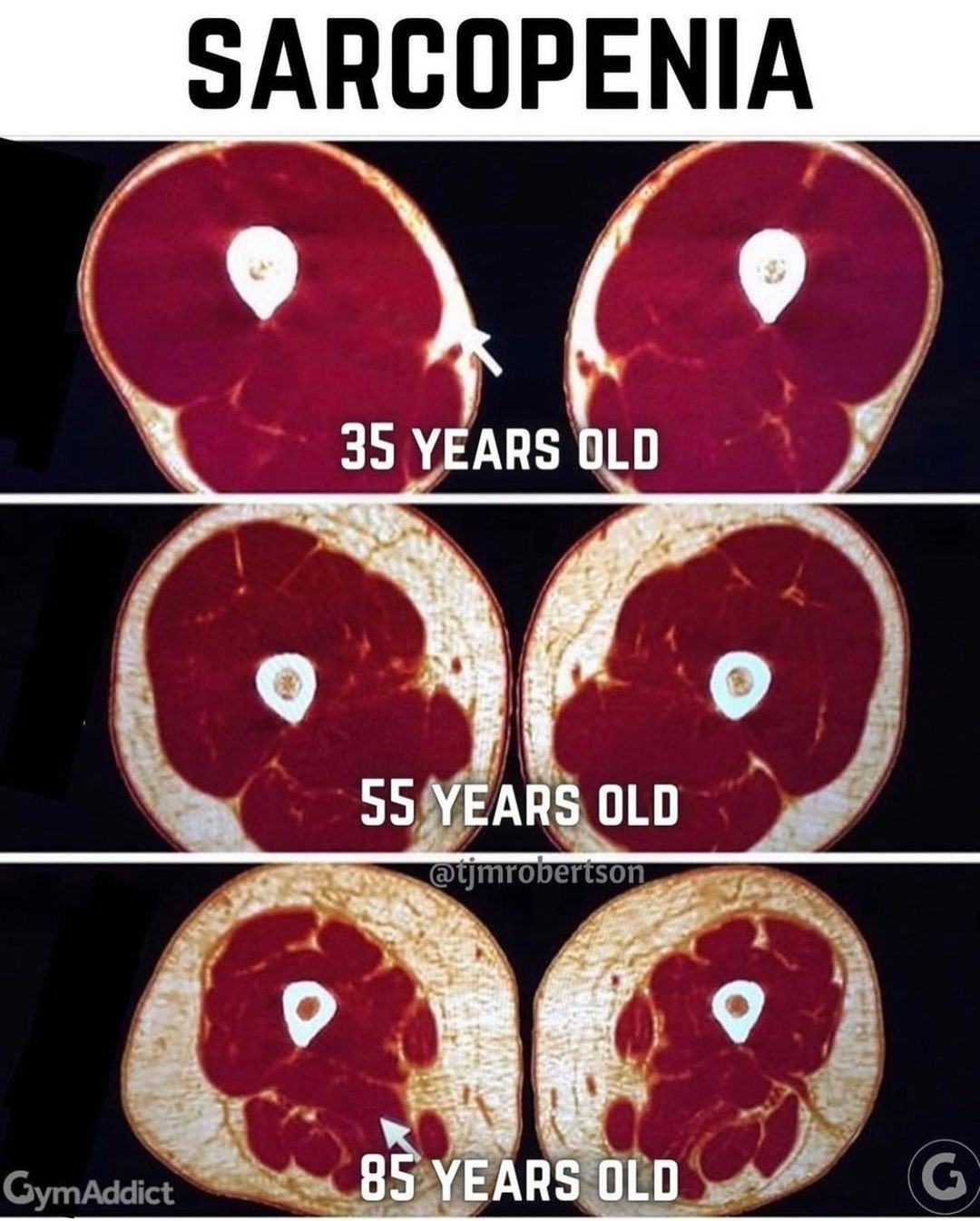
This image shows three cross-sections of a man's thigh at different ages. Hormonal changes cause losses in muscle mass and strength. Reduced muscle use also decreases bone density, with all the consequences that follow.
To improve quality of life, there is really one true remedy: strength training. It has so many benefits that, in my view, it should be compulsory for everyone. Done well—with correct movement, enough rest and appropriate nutrition—it offers:
These benefits make everyday activities less demanding, leaving more energy for other things and helping you feel fitter. You can more easily keep up with your children or grandchildren and continue doing familiar activities. You are also less likely to fall, and if you do, the risk of fractures is much smaller.
Hormonal changes inevitably reduce muscle mass, resulting in a smaller “engine”. With less muscle, you burn fewer calories throughout the day. Many people keep eating as usual, leading to increased body fat. This often appears around the abdomen, legs, arms and neck. Those are the unwanted aesthetic effects. Much fat is also stored around the organs—visceral fat—which greatly increases the risk of bowel cancer. You may barely notice that your body fat is too high because your weight has hardly changed, even though your body composition has changed considerably. This is a silent cause of ill health.
If you have also gained excess weight, quality-of-life problems become greater still. Think of it this way: each day, you move around with less muscle strength than ten years ago, while carrying a heavier “backpack” of, say, 20 kg. Not briefly, but all day. That makes you tired and low in energy. Feeling tired makes getting off the sofa harder, drawing you into a downward spiral.
This sounds rather bleak, and it happens gradually. Yet it is a reality everyone faces. Fortunately, some people take matters into their own hands and decide they do not want this for themselves. Targeted strength training twice a week: that is all.
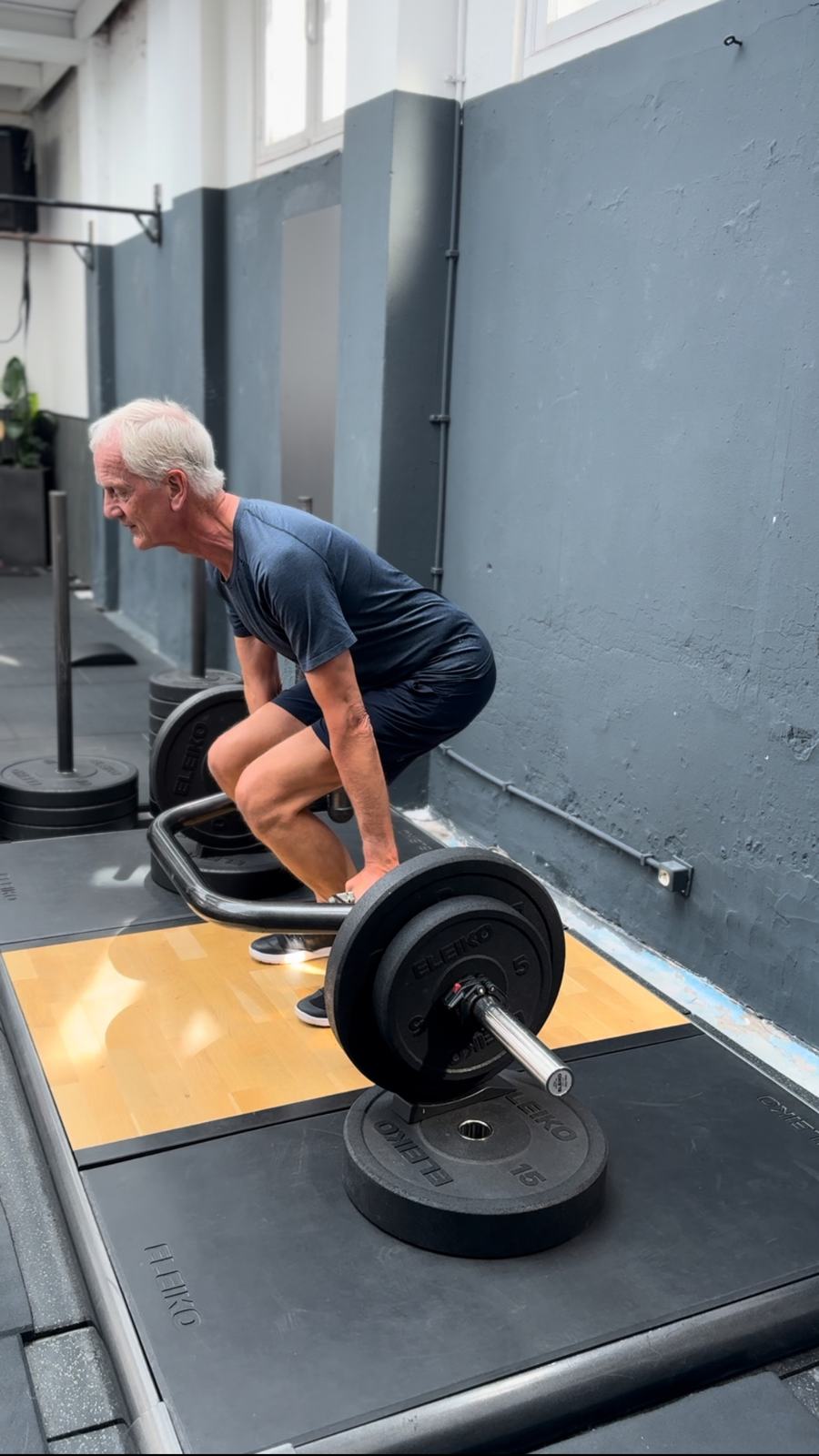
So now we know: strength training improves quality of life, and cardio extends it. What happens when you combine the two? Not everyone enjoys the activities, but everyone can appreciate the benefits. In my opinion, this understanding should be much more widely shared and acted upon in society. Of course, as a gym owner, I see the world through my own coloured lens. Still, I believe everyone deserves to understand hormonal changes and the effects of ageing on the body, so that they might feel encouraged to take action. Give yourself a long, healthy life with enough energy to enjoy the people and experiences around you. Doing nothing and eventually becoming subject to possible health complaints is also an option.
It is up to you.

Written by
Start here
Three sessions with a coach. No strings attached.
Keep reading