
FUNDAMENTALS
How to Make the Gym a Habit That Actually Sticks
You finish work, make dinner, put the children to bed and finally sit down. You had planned to go to the gym. Now, even finding your training shoes feels like an effort.
Sound familiar?
Building a consistent gym routine starts with choosing realistic training times, following a clear programme and preparing for the moments that usually throw you off course. Support from a partner or coach can help you protect those appointments.
At Fundamentals, we believe your training should fit into your actual life. That means understanding your working hours, family responsibilities, energy levels and eating habits—and building a system around them.
No system is completely failure-proof. A useful one helps you keep going during ordinary weeks and find your way back after difficult ones.
Sometimes the problem begins with a plan that asks too much of you.
You decide to train four evenings a week, change your diet and get up earlier. That might work while your enthusiasm is high. But what happens when work gets busy or your children sleep badly?
Before starting again, examine where your previous routine broke down.
Perhaps you were:
Each of these problems suggests a different solution. More determination alone will not fix an unsuitable time slot or an unclear programme.
Identify your main obstacle before adding more commitments.
If you regularly skip workouts after putting the children to bed, consider moving the session.
Could you train during the working day? If your job allows it, discuss a longer lunch break and adjusted hours with your employer. If you work from home or run your own business, book a training appointment into your diary before other commitments fill the space.
Early mornings may also work. A 7 am session could fit before the school run if travel times and your household arrangements allow it.
That requires a conversation. Perhaps your partner handles breakfast while you train, and you take over afterwards. On another day, you protect their time.
Protect your sleep as well. An early workout needs a bedtime that makes it sustainable.
If weekdays are difficult, combine one weekday session with one weekend session. Wednesday lunchtime and Saturday morning may be more realistic than trying to train every evening.
Two well-planned strength sessions per week can be a useful starting point for improving strength and building consistency, particularly for beginners.
The WHO recommends muscle-strengthening activities involving all major muscle groups on at least two days per week, alongside aerobic activity. This is a general health recommendation, not a guarantee of a particular training result. WHO physical activity guidance
Your progress also depends on the programme, the challenge of the exercises, recovery and how consistently you train.
Book enough time to complete your session without rushing. Around an hour may be convenient, but there is no universal requirement for a workout to last 60 minutes. A shorter, focused session can still be valuable.
Training provides a stimulus; recovery allows adaptation. Your coach can help balance both and gradually adjust the programme as you become stronger.
“I want to exercise more” leaves a lot undecided.
Try this instead:
“On Wednesdays, I leave for the gym at 12:15. My bag is already packed, and I follow the programme saved on my phone.”
You have decided when to leave, what to bring and what to do.
Research into everyday habit formation supports repeating a behaviour in a consistent context. Over time, the situation itself can become a cue for the action. The original study examined daily eating, drinking and activity behaviours, so it does not provide an exact timetable for building a twice-weekly gym habit. Lally and colleagues, How are habits formed?
For your training, practical cues might include packing your bag after dinner, going directly from work or meeting your trainer at the same time each week.
Choose a few preparations that make getting started easier.
Consistency is harder when every visit starts with uncertainty.
Which exercises should you choose? How heavy should you go? Should you repeat last week’s workout or change everything?
A suitable programme gives you direction. It sets out what you will do and provides a way to track progress.
At Fundamentals, personal training combines that structure with individual coaching. Your trainer can help you practise technique, choose appropriate loads and recognise when to push or adjust.
Progress can also become easier to notice. You might perform an exercise with more control, complete another repetition or lift a little more than before.
Those improvements give you something concrete to build on.

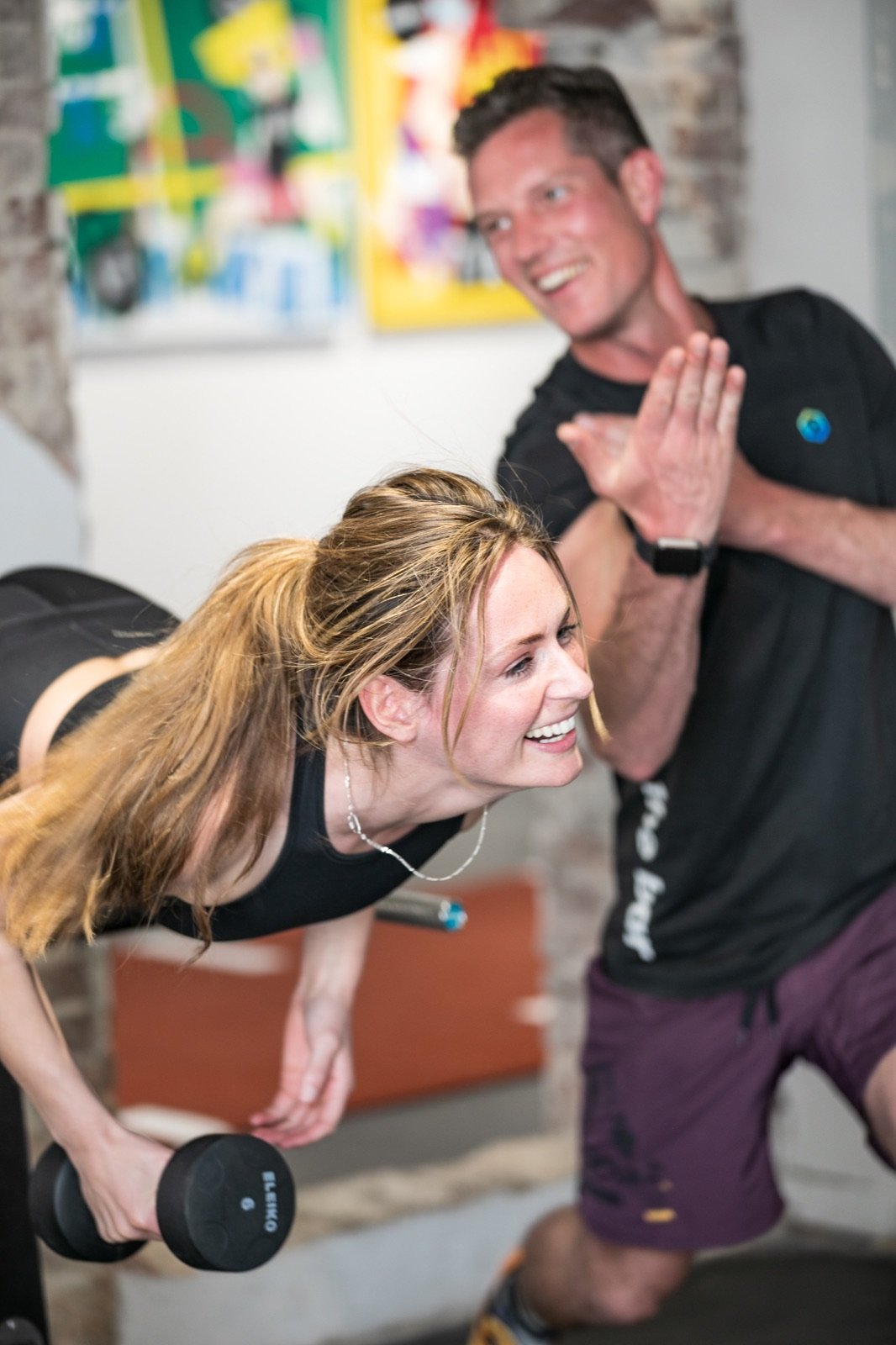
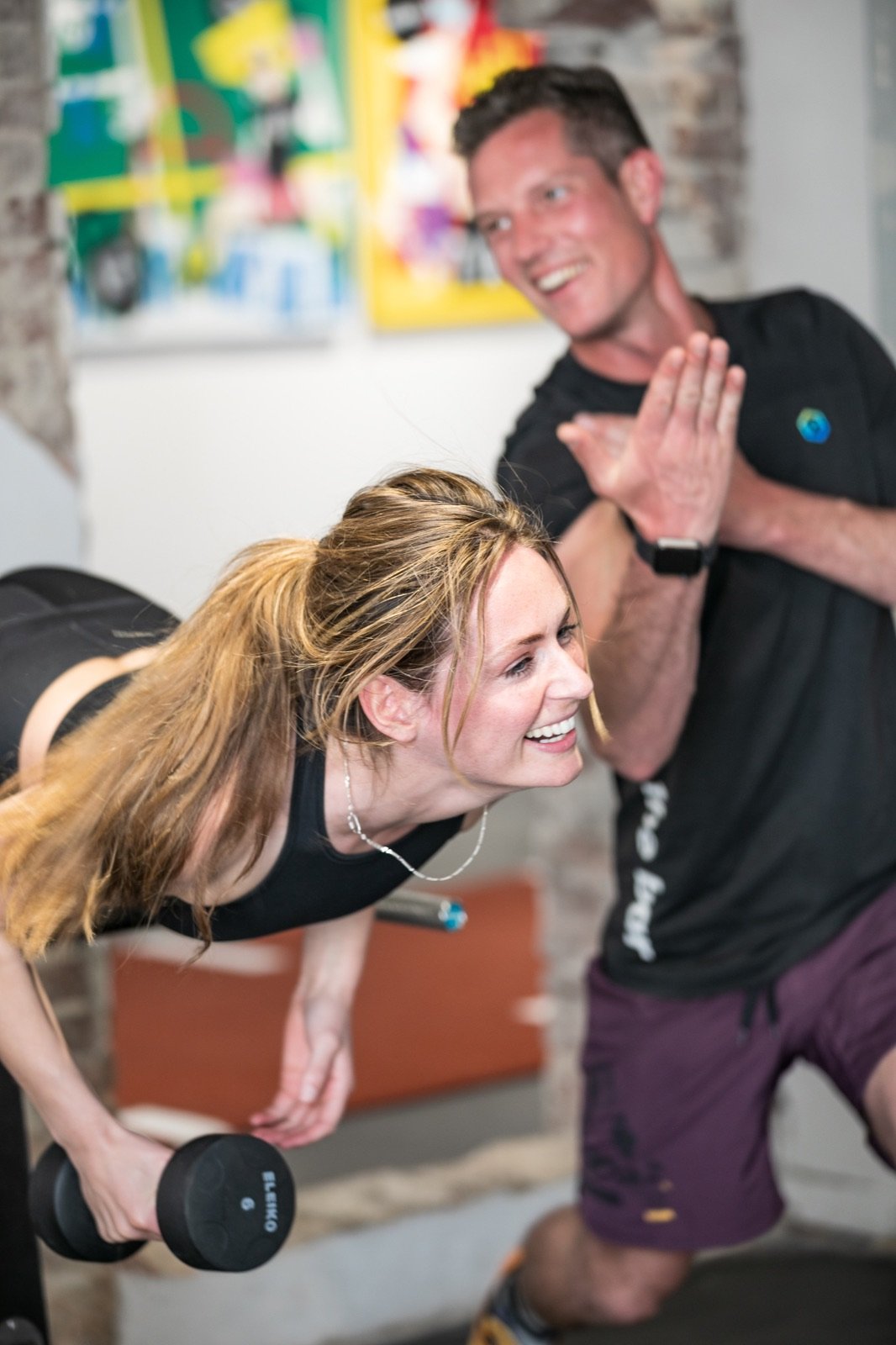
Prepare your programme before you arrive, so every session has a clear purpose. Photography: Rowin Prins.
An appointment with a trainer adds another person to your plan. Someone expects you, understands your goals and can help when your routine becomes difficult.
That support should make it easier to be honest. If you missed sessions because your working hours changed, your coach needs to know so you can adjust the approach together.
Regular personal training is one option. Another is a hybrid arrangement: a coached session every other week, combined with independent training using your trainer’s programme.
This can suit people who want professional direction while keeping their coaching costs more manageable. Between appointments, you practise independently; at the next session, you review progress and refine the plan.
Independent training also requires sufficient confidence and experience to exercise safely. Our guide to Open Gym or Personal Training explains how to choose an approach that fits your needs.
The same thinking applies to nutrition.
Imagine the children arrive home from school at around 4 pm. You give them a biscuit and have one yourself. Then two more, because you suddenly realise how hungry you are.
Eating a biscuit is not a failure. But if this pattern regularly conflicts with your goals, consider what happens before it.
Would a planned snack at 3 pm help? For example, a bowl of quark with fruit and some nuts might suit you better than arriving at the school run hungry.
Choose food and portions that fit your needs and preferences. The purpose is to prepare for a predictable situation.
Other useful preparations could include keeping lunch ready on busy days or deciding on dinner before you get home.
For some people, a consistent eating window offers useful structure. This is a form of intermittent fasting: eating within chosen hours rather than throughout the day.
If evenings often involve unplanned chocolate or crisps, deciding on your eating routine earlier may reduce repeated decisions when you are tired.
However, fasting does not automatically produce weight loss. The Dutch Nutrition Centre explains that benefits are strongest when people with overweight consume less energy than they use and lose weight. There is no single eating schedule that is best for everyone. Voedingscentrum: intermittent fasting
You could also choose a simpler agreement:
“After dinner, I make tea. If I am hungry later, I have the snack I planned.”
You do not have to ignore hunger or remove foods you enjoy. If fasting leaves you excessively hungry or encourages overeating, a regular meal pattern may suit you better.
If you are pregnant, breastfeeding, have a history of eating disorders, have diabetes or take medication affected by meal timing, seek advice from your doctor or dietitian before considering fasting.
A useful routine includes an answer to: “What happens when I cannot follow the original plan?”
For example:
Treat these as options to adapt, rather than rules everyone must follow.
If you miss a session, return at the next realistic opportunity. You do not need to punish yourself with an exhausting workout or wait until Monday to begin again.
You can start building your system today:
At the end of the week, review what worked. If something repeatedly failed, change that part of the system.
Keep the next step clear: a scheduled time, a prepared bag and a programme you understand. Choose a workload you can sustain and arrange support where it helps. Persistent exhaustion is a reason to review your workload and recovery, rather than simply pushing harder.
There is no fixed deadline. Habit formation varies with the person, behaviour and circumstances. Focus on repeating a workable routine rather than expecting training to feel automatic after a particular number of days. Research on habit formation
Choose the time you can attend consistently while protecting sleep and other responsibilities. If you repeatedly miss evening sessions, test a morning, lunchtime or weekend slot and review how it works.
No. Session length depends on your programme, goals and available time. Tell your trainer how much time you realistically have so the workout can be planned accordingly.
Resume with a manageable session and consider why the interruption happened. After illness or injury, you may need to reduce the workload or seek advice. Avoid trying to squeeze every missed workout into the following week.
A trainer can provide fixed appointments, a suitable programme, feedback and support with obstacles. You still make the commitment, but you have someone helping you turn it into practical actions.
No. It is one possible approach to organising food intake, and it does not suit everyone. Choose an eating pattern that supports your nutritional needs and is sustainable for you.
At Fundamentals in Haarlem Centrum, Haarlem Oost and Alkmaar, we help you connect your goals to the practical details of your week.
That may mean regular personal training, a hybrid approach or developing the skills to train independently with confidence.
Explore our Kickstart and Fundamentals Experience options, or contact our team to discuss a routine that fits your life.
Start with two appointments, one clear plan and the support you need to keep going.
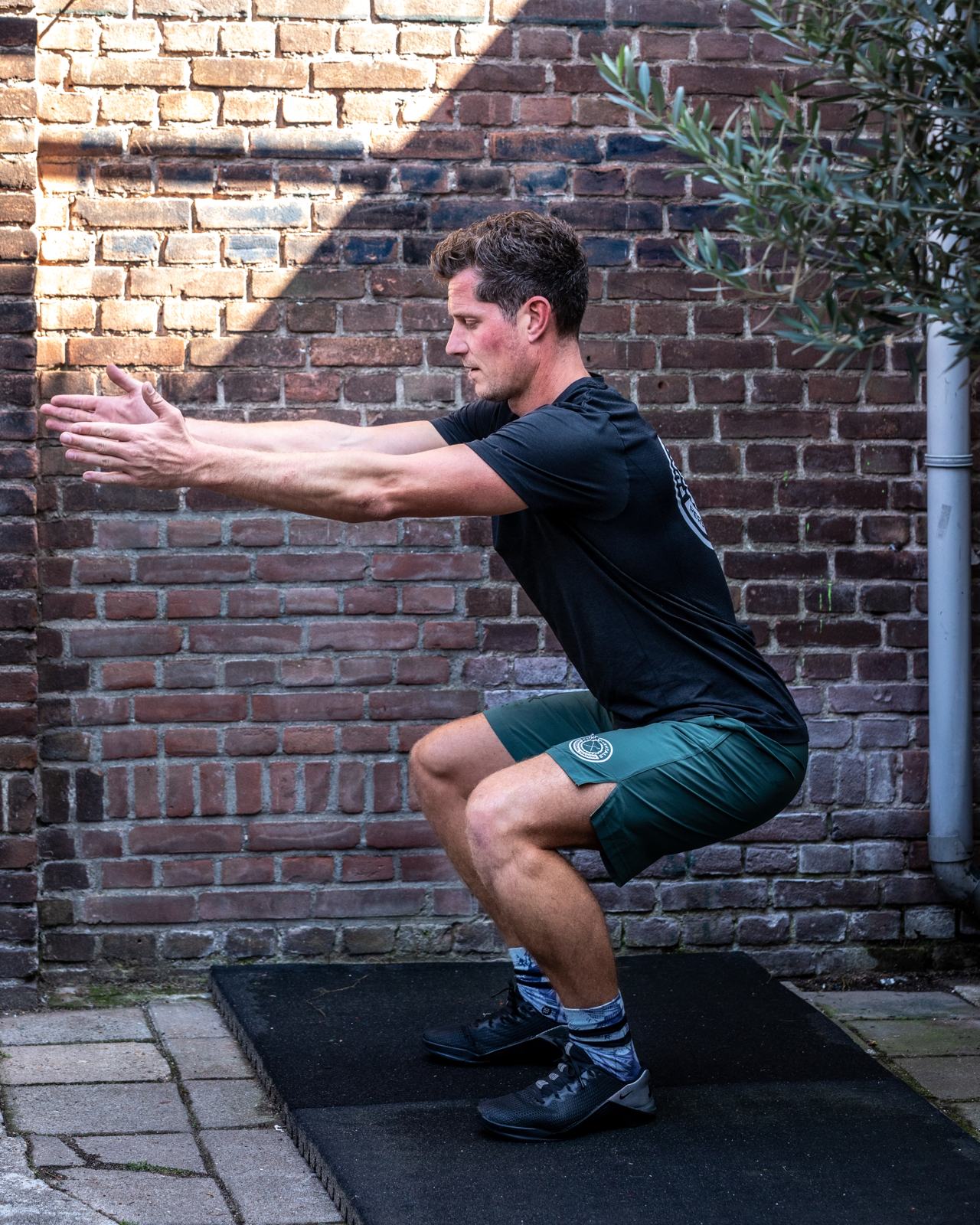
Photography: Rowin Prins, from the Fundamentals photo library.
“He listens, builds a program around my goal, and keeps adjusting it based on my results. I'm far more aware of how I train.”
Marianne Deenik · Trains with Thijs


© Fundamentals 2017–2026


